By the late 1960s, the Western as a popular movie genre was on it's way out and the ones that did get made started to reflect that thinking. Movies like The Wild Bunch and Butch Cassidy and the Sundance Kid dealt with characters who no longer fit into the world, who had to watch the slow but inevitable passing of the Old West. It is perhaps fitting that the most poignant of these movies just happened to be the last movie of what may well be the most legendary Western star of all.
1976's The Shootist opens with a montage of scenes from earlier John Wayne westerns, including Hondo and Rio Bravo. The theoretical purpose of the montage is to tell us the lethal legacy of Wayne's character, J.B. Books. But the montage also serves as a reminder of how dominant an actor Wayne was in the genre.
 Books arrives in Carson City on January 22, 1901. He hasn't been feeling like himself so he goes to a doctor (James Stewart) he trusts. He finds out he has Cancer and maybe two months to live. He wants to die in peace, so he rents a room from a widow (Lauren Bacall) and her son (Ron Howard). As people find out not only who he is but that he's dying, the glory seekers and vultures come out. Eventually he decides he'd rather go out in a blaze of glory than screaming in agony.
The Shootist is packed with guest appearances from various friends and costars of Wayne's. Besides Bacall and Stewart, Richard Boone, John Carradine, Harry Morgan, Hugh O'Brian, Scatman Crothers, Melody Thomas Scott, and even Johnathan Goldsmith--the Most Interesting Man in the World himself--all appear. It's a hell of a cast, the type you don't see much anymore. I don't know how many, if any, realized they were going to be in the last movie John Wayne starred in, but they all play up to the part.
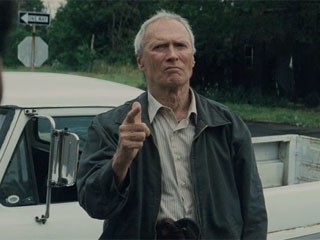
 Clint Eastwood's Gran Torino seems to have borrowed quite a few things from this. In both films, the protagonist develops a fatherly relationship with a young boy who tries stealing from him. Both films have a man of violence who learns he is dying of cancer. Both heroes decide to go out with a bang instead of a whimper.
But while the film should be a completely sober and depressing piece, Wayne elevates it above the morbid. He's still John Wayne after all. The scene where he turns the tables on greedy Undertaker Carradine and makes him pay for the privilege of burying Wayne is hilarious. But it's his verbal sparring with Bacall that really makes the movie. She loathes him at first, then pities him, then wants and needs to save him. She can't, of course. But watching two old pros like these play off one another is justification enough for the movie. And it's all done without really becoming a love story.
 Some may complain that Wayne never really acted, he just played John Wayne over and over. But that can be said of a lot of actors then and now. After all, didn't we like Jimmy Stewart for essentially being Jimmy Stewart over and over? Wayne was a personality performer and like all personality performers, we watched him be him and loved it. He was a forerunner to later action heroes like Sylvester Stallone, only he managed to make some better movies. The Shootist is the last chance we get to see what made him such a great personality and by extension, such a great actor.
Contrary to popular belief, Wayne wasn't dying when he made The Shootist. He had been in remission since 1969. None the less, this does seem to be his way of facing his own mortality. Three years later he would be gone having made no more movies. In that sense, this is his goodbye and it's a beautiful and emotional one.
 Books arrives in Carson City on January 22, 1901. He hasn't been feeling like himself so he goes to a doctor (James Stewart) he trusts. He finds out he has Cancer and maybe two months to live. He wants to die in peace, so he rents a room from a widow (Lauren Bacall) and her son (Ron Howard). As people find out not only who he is but that he's dying, the glory seekers and vultures come out. Eventually he decides he'd rather go out in a blaze of glory than screaming in agony.
The Shootist is packed with guest appearances from various friends and costars of Wayne's. Besides Bacall and Stewart, Richard Boone, John Carradine, Harry Morgan, Hugh O'Brian, Scatman Crothers, Melody Thomas Scott, and even Johnathan Goldsmith--the Most Interesting Man in the World himself--all appear. It's a hell of a cast, the type you don't see much anymore. I don't know how many, if any, realized they were going to be in the last movie John Wayne starred in, but they all play up to the part.
 Clint Eastwood's Gran Torino seems to have borrowed quite a few things from this. In both films, the protagonist develops a fatherly relationship with a young boy who tries stealing from him. Both films have a man of violence who learns he is dying of cancer. Both heroes decide to go out with a bang instead of a whimper.
But while the film should be a completely sober and depressing piece, Wayne elevates it above the morbid. He's still John Wayne after all. The scene where he turns the tables on greedy Undertaker Carradine and makes him pay for the privilege of burying Wayne is hilarious. But it's his verbal sparring with Bacall that really makes the movie. She loathes him at first, then pities him, then wants and needs to save him. She can't, of course. But watching two old pros like these play off one another is justification enough for the movie. And it's all done without really becoming a love story.
 Some may complain that Wayne never really acted, he just played John Wayne over and over. But that can be said of a lot of actors then and now. After all, didn't we like Jimmy Stewart for essentially being Jimmy Stewart over and over? Wayne was a personality performer and like all personality performers, we watched him be him and loved it. He was a forerunner to later action heroes like Sylvester Stallone, only he managed to make some better movies. The Shootist is the last chance we get to see what made him such a great personality and by extension, such a great actor.
Contrary to popular belief, Wayne wasn't dying when he made The Shootist. He had been in remission since 1969. None the less, this does seem to be his way of facing his own mortality. Three years later he would be gone having made no more movies. In that sense, this is his goodbye and it's a beautiful and emotional one.